
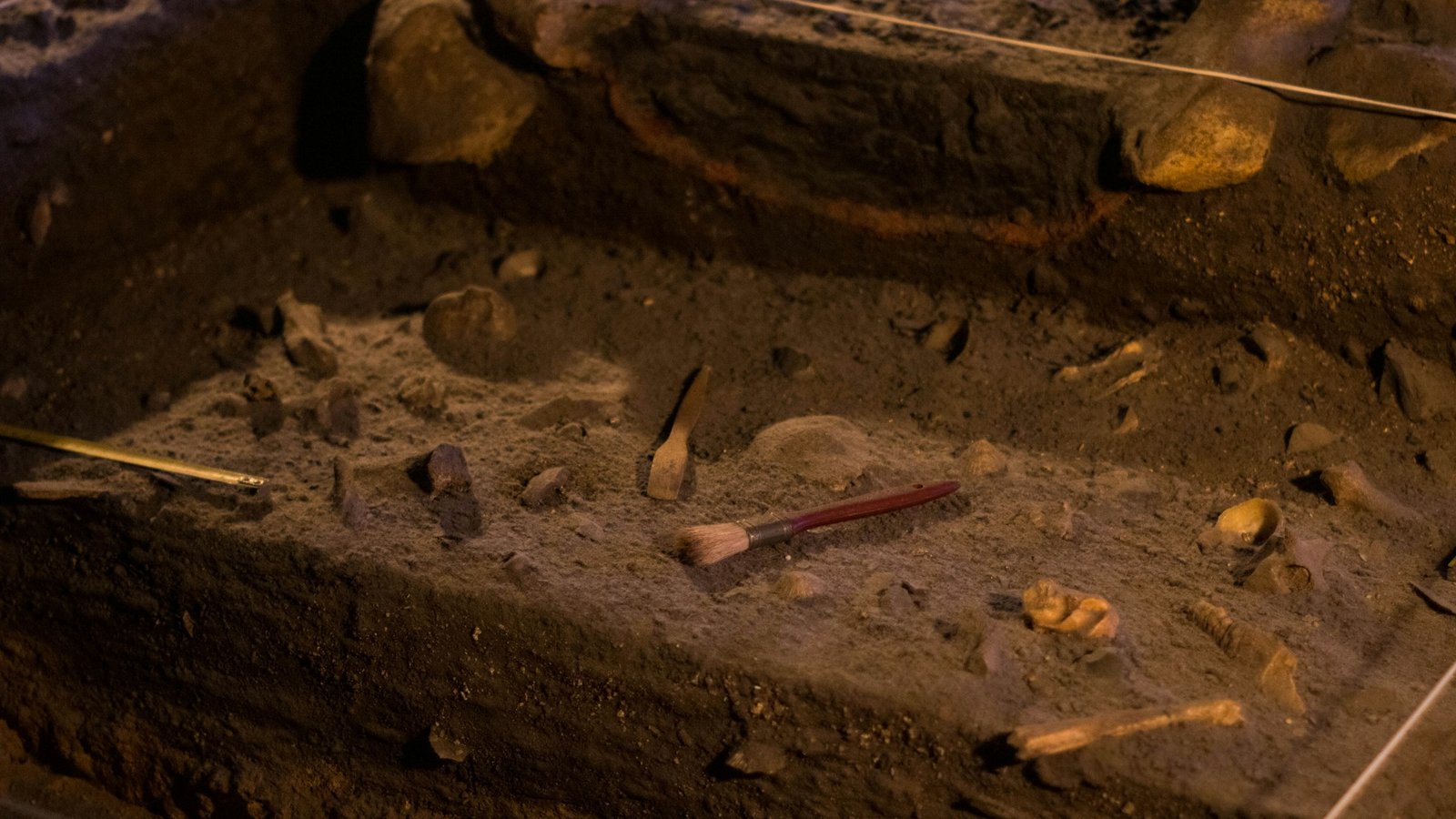
Nobody can name the first doll ever made. The earliest ones were likely cloth or wood that rotted long ago. The oldest surviving object that archaeologists call a toy doll is a 3-centimeter stone head from Pantelleria, Italy, about 4,000 years old.
Older human figures exist, some by tens of thousands of years. The catch is that their makers probably did not intend them for play. That toy-or-ritual question runs through the whole history of dolls, and it decides most “first doll in the world” claims.
What Is the Oldest Doll in the World?
The oldest doll-like figure on record is a 28,000-year-old ivory carving from Brno, in today’s Czechia. Guinness World Records lists it as the oldest puppet. It is not a toy, since Guinness describes it as a Paleolithic shaman figure from a grave.
The record entry gives the details. Workers found the figure in 1891 while digging for a sewer system. It is 20 centimeters tall, carved from mammoth ivory, and colored with red ochre.
If the question means the oldest doll made for a child, the best candidate is far younger. That is the Bronze Age head from Pantelleria, discussed below.
The Pantelleria Doll Head, About 4,000 Years Old
In August 2004, The Guardian reported a find from Mursia, a fortified Bronze Age village on Pantelleria, between Sicily and Tunisia. Archaeologists recovered a stone head 3 centimeters tall, crudely carved with eyes, nose, mouth, and wavy hair.
The context made the case. The head lay in the remains of two huts, next to a miniature set of terracotta cooking pots.
“We believe both the saucepans and the head were toys belonging to the girls who lived in this village around 4,000 years ago.”
Fabrizio Nicoletti, University of Suor Orsola Benincasa, quoted in The Guardian, 2004
Nicoletti said his team considered a religious reading and ruled it out because of the find spot. Popular Science later stressed the same detail. Unlike most ancient human figures, the head came from no ceremonial setting.
Context is the evidence here. A figure among child-sized household objects reads as a toy, and in a grave it reads as ritual. That logic still applies when museums catalog later dolls.
Egyptian Paddle Dolls and the Toy Problem
Egypt’s paddle dolls are roughly as old as the Pantelleria head, and they often appear in lists of the oldest dolls ever. The Met dates its examples to the Middle Kingdom, about 2030 to 1802 BCE. Most came from the Theban necropolis, near the temples of Mentuhotep II and Hatshepsut.
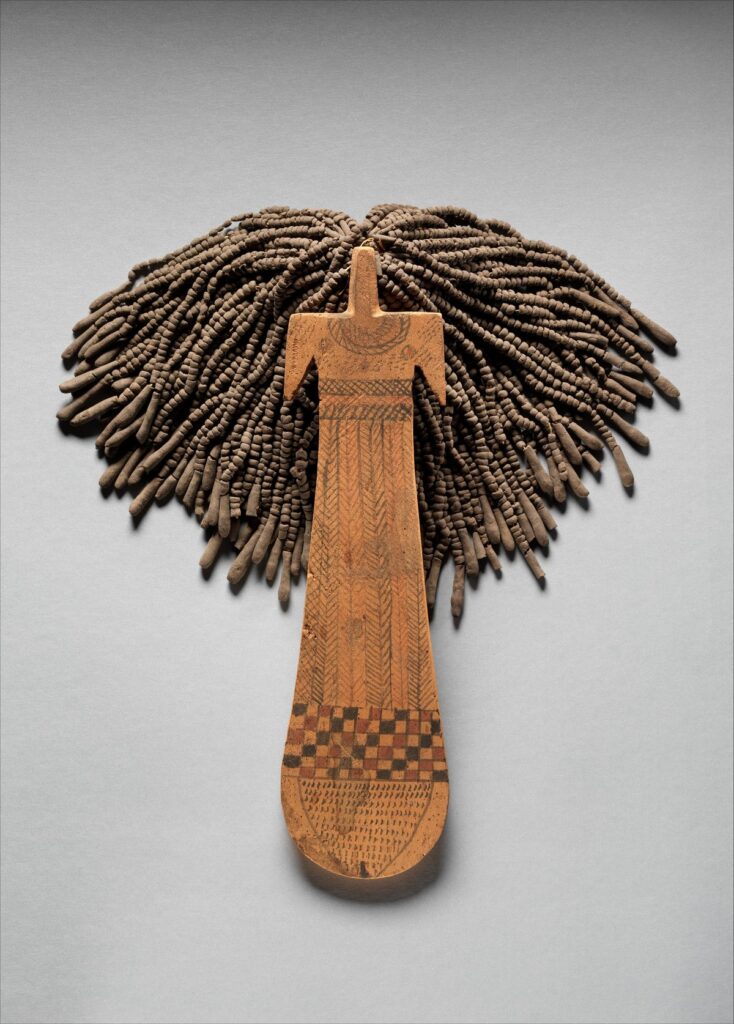
They are flat wooden figures with a keyhole-shaped body, rudimentary arms, and “hair” made of beads strung on linen thread. The Met’s label is blunt about their purpose.
“Contrary to their modern name, these ‘dolls’ were not toys.”
The Metropolitan Museum of Art, catalog entry for Paddle Doll, 31.3.35a, b
The museum links their shape to the counterpoise of the menat necklace, a percussion instrument shaken in ceremonies for the goddess Hathor. It notes a suggestion that paddle dolls belonged to troupes of singers and dancers who performed at those rites.
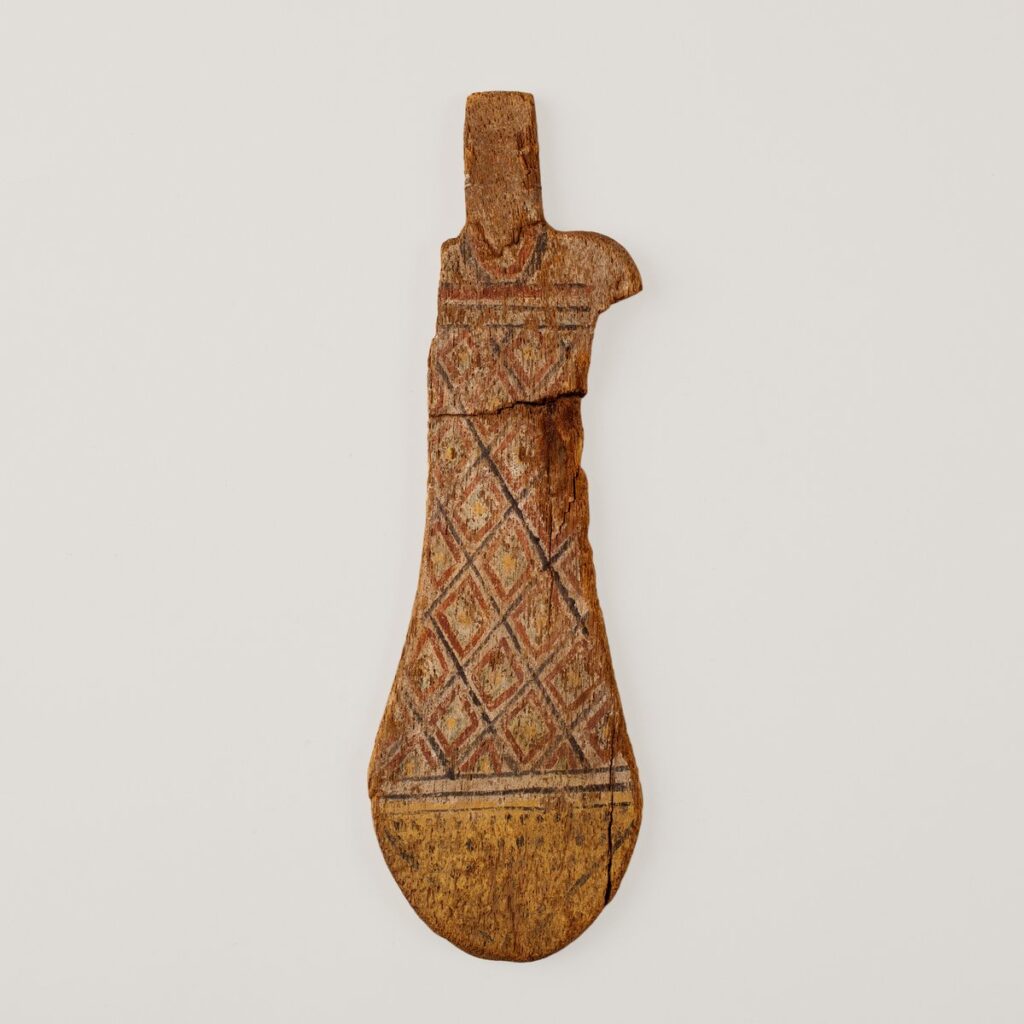
Edward Bleiberg, an Egyptian art curator at the Brooklyn Museum, made a related point to Popular Science. Many wooden dolls from Egyptian tombs are as old as the Pantelleria head, he said. Most carry reproductive symbols and probably were not playthings.
How the Oldest Dolls Compare
The three candidates differ more in purpose than in age. The table sets out what each source actually claims.
| Object | Approximate age | Material | Found in | Toy? |
|---|---|---|---|---|
| Brno figure | 28,000 years | Mammoth ivory, red ochre | A grave, Brno, 1891 | No; described as a shaman figure |
| Paddle dolls | About 3,800 to 4,050 years | Wood, mud beads, linen string | Theban tombs, Egypt | No, per the Met |
| Pantelleria head | About 4,000 years | Stone | Hut remains, Mursia, 2004 | Probably, per the excavators |
History of Doll Making After the First Dolls
Doll making leaves a clearer record after the Bronze Age. Greek workshops produced jointed terracotta figures with movable limbs, and later centuries added wood, wax, bisque, and cloth.
Cloth survives only in dry places, which is why Egypt matters again later. Papyrus-stuffed dolls from Roman Egypt appear in our look at the first soft toy, centuries after the Pantelleria head. Plush came far later, and our search for the oldest plush in the world starts in the 1890s.
The first doll ever made is lost. The oldest known toy doll is a small stone head that counts only because of the pots beside it. Any seller or website claiming more certainty than that is filling the gap with guesswork.
Sources
- The Guardian, “Dig finds ancient stone doll,” August 6, 2004, theguardian.com.
- Guinness World Records, “Oldest puppet,”, guinnessworldrecords.com.
- The Metropolitan Museum of Art, “Paddle Doll,” 31.3.35a, b, metmuseum.org.
- The Metropolitan Museum of Art, “Paddle Doll,” 15.10.90, metmuseum.org.
- The Metropolitan Museum of Art, “Paddle Doll,” 31.3.38, metmuseum.org.
- Popular Science, “FYI: What Is the Oldest Toy in the World?,” 2012, popsci.com.