
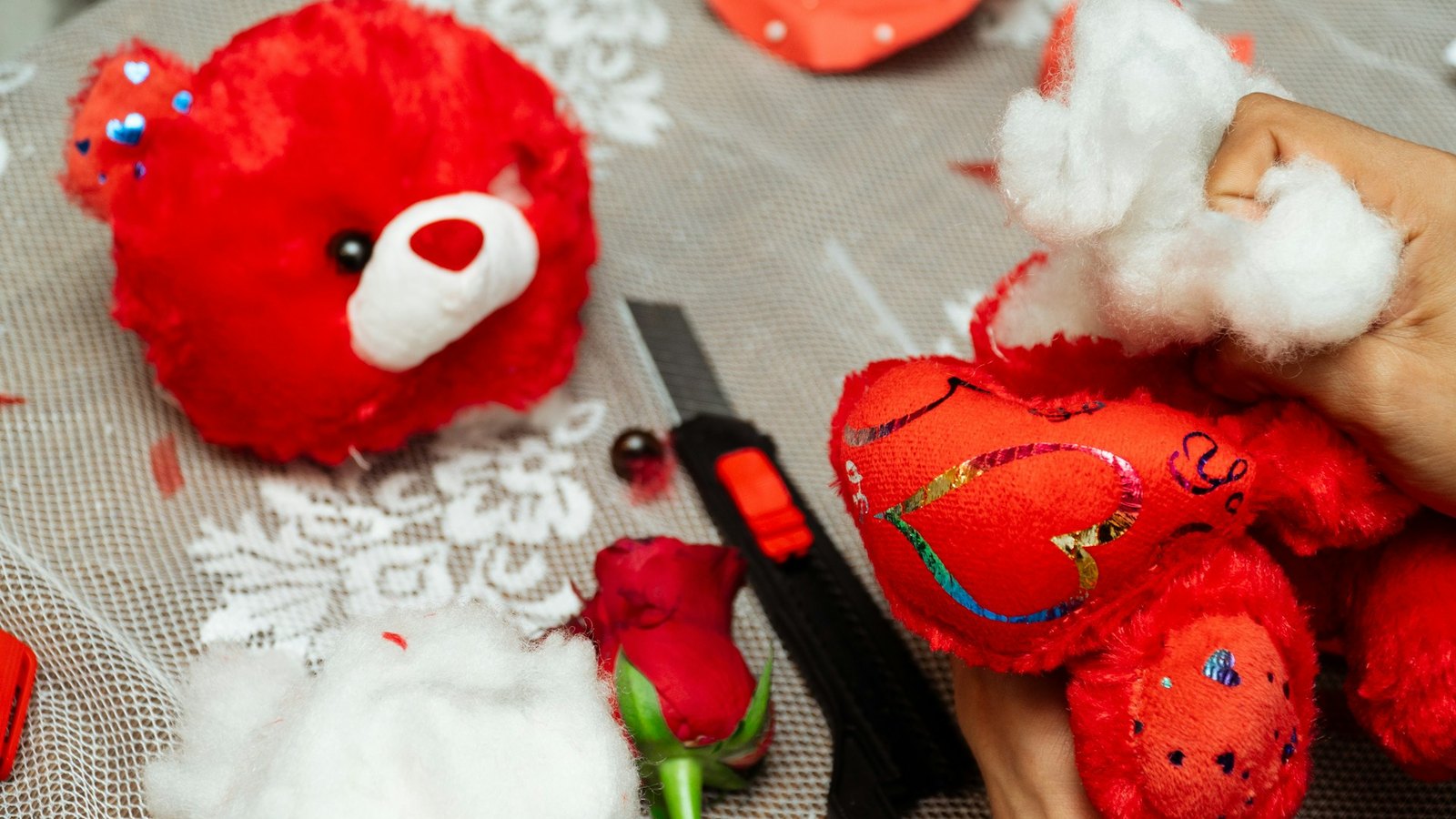
Stuffed animal evolution throughout the years is mostly a story about what went inside. Straw and wood shavings gave way to wood wool and kapok, then to foam and synthetic fiber.
The outside changed too, from felt and printed cotton to mohair plush and then nylon. Safety rules arrived last, with the first comprehensive toy standard in 1976. For the wider narrative, see our history of stuffed animals.
Stuffed Animal Origins in Felt, Cotton, and Straw
What plush toys from the 1800s were really made of
Most so-called plush toys from the 1800s contained no plush at all. Margarete Steiff’s first elephant of 1880 was felt, according to her company’s history. The Arnold Print Works animals of 1892 were roller-printed on plain-weave cotton, as Cooper Hewitt’s catalog records.
Fillings were whatever a workshop or a household had on hand. The V&A describes a Steiff felt hen of about 1900 as stuffed, probably, with straw. “Pumpie,” a homemade elephant from the same years, is stuffed with very fine wood shavings and pieces of cork.
Older than the 1800s
We found no plush toys from centuries earlier in museum catalogs. The stuffed playthings that survive from antiquity are linen dolls packed with rags and papyrus. The survivors are traced in our search for the oldest plush in the world.
Mohair, Wood Wool, and Kapok, 1902 to the 1950s
Mohair plush
Plush entered toymaking with a single order of fabric. In 1902, Richard Steiff designed the Bear 55 PB in mohair plush from a Duisburg weaving mill. Mohair, a long fiber from Angora goats, gave a fur-like pile that felt could not match.
Wood wool and kapok fillings
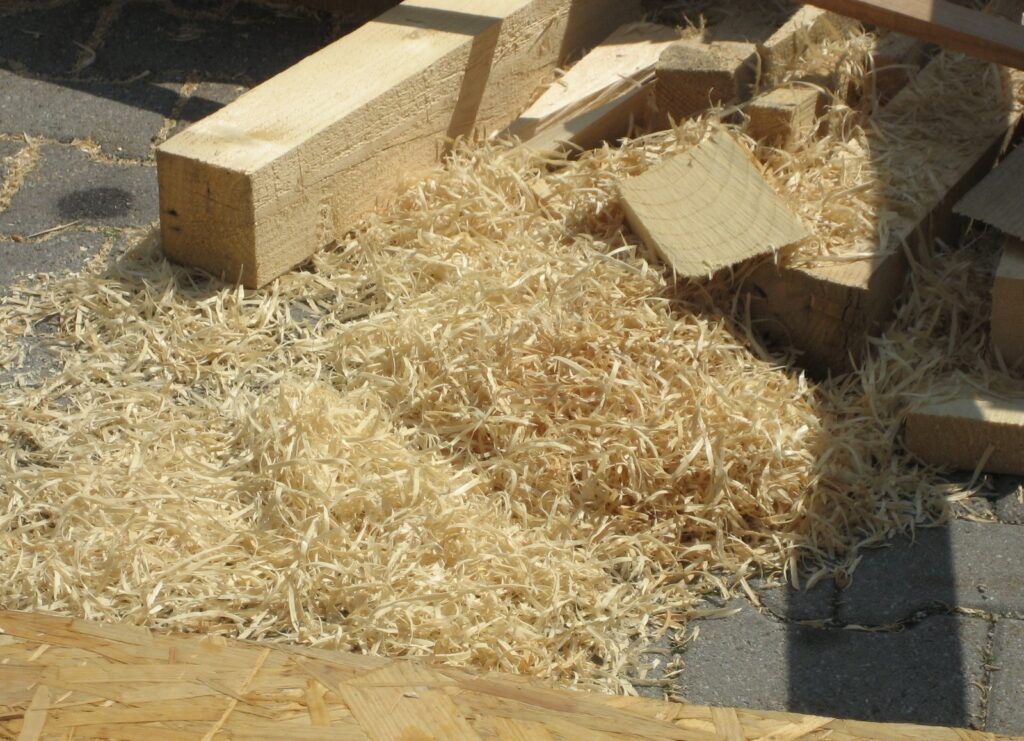
Early jointed bears were packed hard. For a Steiff bear of 1904 to 1905, the V&A records a mohair exterior “stuffed with excelsior (wood wool) and kapok.” Wood wool is a mass of thin wood shavings, and it makes a firm, slightly crunchy body.
Kapok, a light seed fiber from the kapok tree, gave a softer fill. In a 1930s Hugmee bear by the English firm Chiltern Toys, the V&A notes kapok in the body and limbs. The head held a mix of wood wool and kapok.
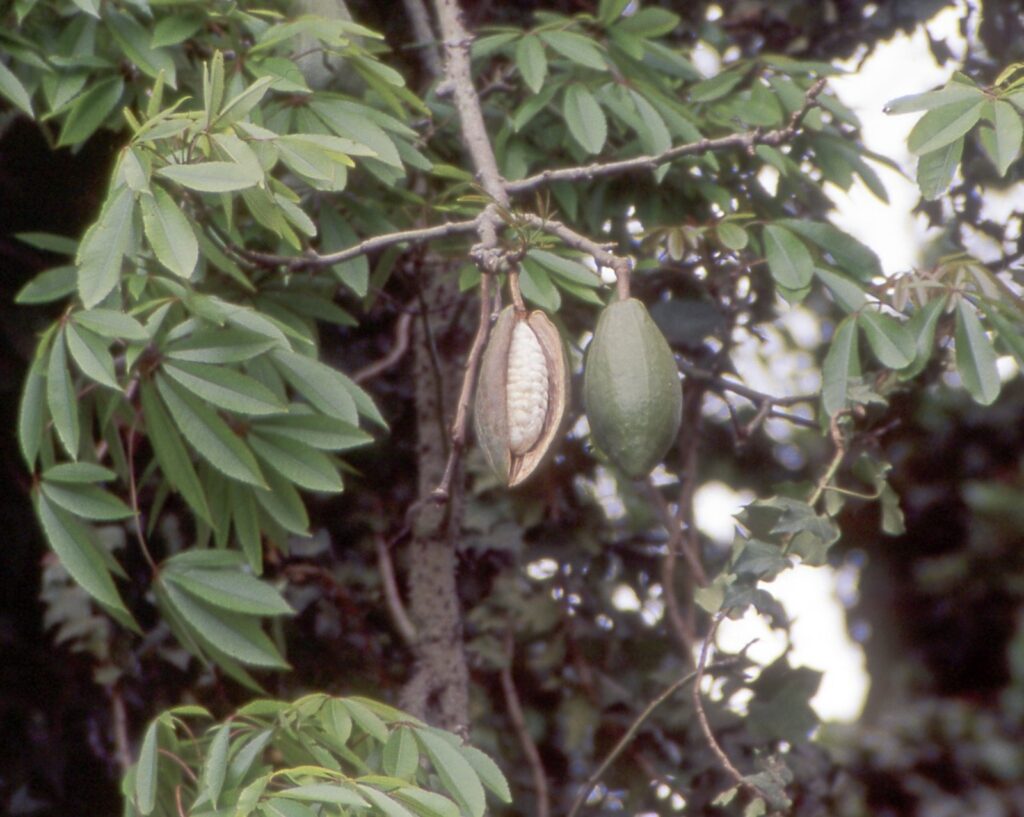
The mix lasted well past the Second World War. Merrythought’s “Cheeky” bear, first made in 1957, has a kapok interior and bells in its ears, per the V&A.
Paper and shortage materials
Wartime cut the supply of good fabric. Steiff dates a paper plush teddy bear to 1919, after a shortage of materials. Its company timeline also notes cellulose-like materials and domestic woods during the war and postwar years.
Synthetics and Washable Toys After 1945
Artificial fibers arrived in stages. A Dutch bear from the late 1930s at the V&A has fur of artificial silk plush, a substitute for mohair. After the war, nylon and foam changed both the feel of the toy and the way families cleaned it.
The Welsh firm Wendy Boston shows the shift clearly. Its 1960s bear “Judy,” now at the V&A, has nylon plush, plastic eyes “locked into the face,” and foam filling. The advertising card that came with it shows a mother putting a teddy bear through a mangle.
“Wendy Boston were the first firm in the world to manufacture a complete range of washable soft toys.”
Wendy Boston advertising card, preserved with “Judy” in the V&A collection
That line is a company claim, not an established fact. Steiff, for its part, says its first fully washable jointed teddy bear, Teddy Petsy, arrived in 1984.
Molded foam went further still. A 1960s German bear at the V&A is simply foam covered in fur fabric.
| Era | Outer fabric | Filling | Eyes | Example |
|---|---|---|---|---|
| 1880s–1890s | Felt, printed cotton | Straw, wood shavings, cork | Beads, printed | Steiff felt hen; Arnold Print Works panels |
| 1902–1930s | Mohair plush | Wood wool, kapok | Shoe buttons, glass | Steiff bear, 1904–1905 |
| Wartime | Paper plush, substitutes | Varied | Varied | Steiff paper plush bear, 1919 |
| 1950s–1960s | Nylon plush, fur fabric | Kapok, plastic foam | Locked-in plastic | Wendy Boston “Judy” |
| 1984 | Washable jointed plush | Not stated by Steiff | Not stated by Steiff | Steiff Teddy Petsy |
How Did Safety Standards Change Stuffed Animals?
Safety standards turned stuffed animals from craft objects into tested products. The U.S. toy industry unveiled the first comprehensive toy safety standard in 1976, which ASTM International used as the basis for F963 in 1986. Section 106 of the Consumer Product Safety Improvement Act of 2008 then made F963 mandatory.
United States: ASTM F963 and the CPSC
The Consumer Product Safety Commission enforces F963 as a federal rule at 16 C.F.R. part 1250, and toys made after April 20, 2024, must meet the F963-23 edition. Toys for children 12 and under also need testing at a CPSC-accepted laboratory.
Two parts bear directly on stuffed animals. Section 4.27 covers stuffed and beanbag-type toys, whose seams “must not rip during testing.”
Section 4.6 points to the federal small-parts ban in 16 C.F.R. part 1501. That rule targets toys meant for children under three. A stuffed animal for that age group cannot shed any piece small enough to fit the test cylinder.
European Union: from 1988 to 2030
The EU’s earlier toy directive, 88/378/EEC, was replaced by the Toy Safety Directive 2009/48/EC. Its safety requirements cover physical and mechanical, flammability, chemical, electrical, hygiene, and radioactivity risks. Manufacturers usually show conformity through the harmonized EN 71 series of standards.
A new law is already on the books. Regulation (EU) 2025/2509 was adopted on November 26, 2025, and it applies from August 1, 2030. It adds a digital product passport for every toy and tightens limits on harmful chemicals.
Using Stuffed Animal Evolution Throughout the Years to Date a Toy
Materials are the most reliable dating clue after marks. A crunchy head points to wood wool, a lumpy body to kapok, and an even squash to foam or synthetic fiber.
Press gently on the head and body before reading any label. Wood wool crackles and holds its shape, kapok shifts in small lumps, and foam springs back at once. A bear sold as “1910” that squashes like foam needs a second look.
Antique stuffed animals were never tested against F963 or EN 71. Keep them on the shelf, not in the crib. The open question is whether recycled fills and digital passports will become the dating clues of the next century.
Sources
- Margarete Steiff GmbH, “From the past to the present,” corporate.steiff.com
- Margarete Steiff GmbH, “A legendary invention,” corporate.steiff.com
- Cooper Hewitt, Smithsonian Design Museum, “Tabby’s Kittens,” 1892, 1964-53-3, si.edu
- Victoria and Albert Museum, “Soft toy” (felt hen), Steiff, about 1900, MISC.303-1983, collections.vam.ac.uk
- Victoria and Albert Museum, “Pumpie,” soft toy, Cattley family, about 1900, collections.vam.ac.uk
- Victoria and Albert Museum, “Teddy bear,” Margarete Steiff GmbH, 1904–1905, B.253-2000, collections.vam.ac.uk
- Victoria and Albert Museum, Hugmee teddy bear, Chiltern Toys, 1930s, B.536-2016, collections.vam.ac.uk
- Victoria and Albert Museum, “Cheeky” teddy bear, Merrythought, B.252-1998, collections.vam.ac.uk
- Victoria and Albert Museum, teddy bear in artificial silk plush, late 1930s, B.95:1-1996, collections.vam.ac.uk
- Victoria and Albert Museum, “Judy,” teddy bear, Wendy Boston, 1960s, MISC.124-1988, collections.vam.ac.uk
- Victoria and Albert Museum, foam teddy bear, Germany, 1960s, B.11-2006, collections.vam.ac.uk
- ASTM International, “Taking Fun Seriously,” Standardization News, 2016, astm.org
- U.S. Consumer Product Safety Commission, “Toy Safety Business Guidance,” cpsc.gov
- European Commission, “Toy safety,” single-market-economy.ec.europa.eu