

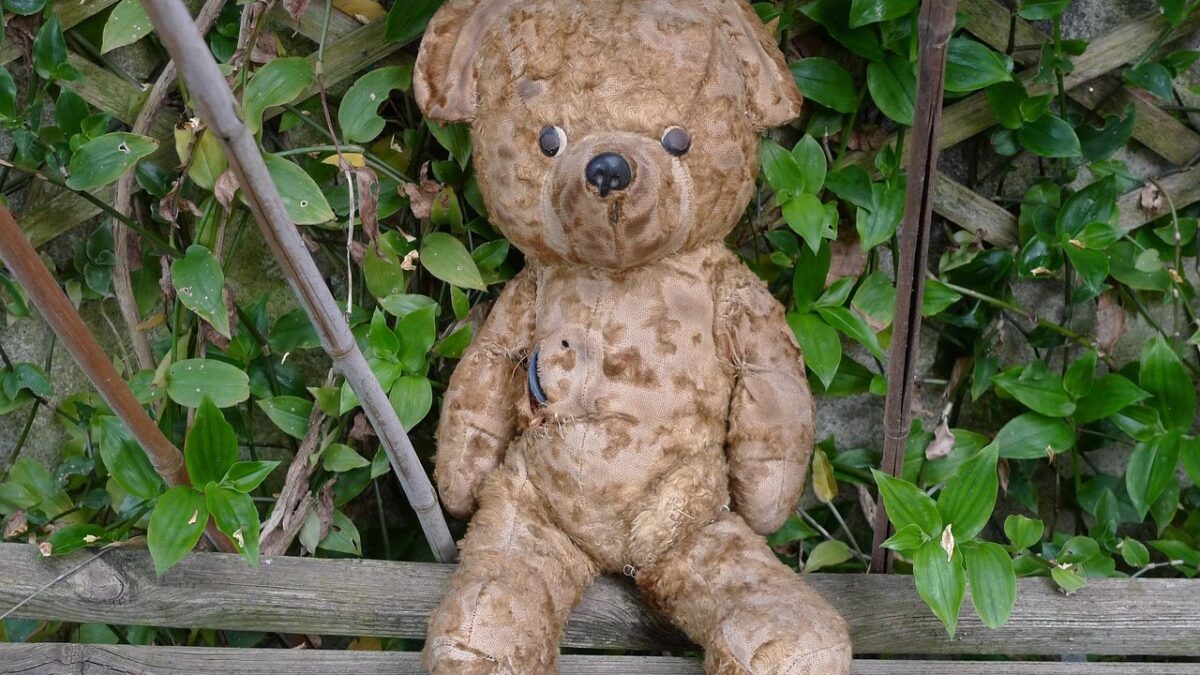
Museums clean vintage stuffed animals mostly by not washing them. Conservators start with low-suction vacuuming through a screen, check for insects, and store the toy cool and dark. Water comes last, if at all.
We drew every step below from the Canadian Conservation Institute (CCI), the Smithsonian, the US National Archives, and Winterthur Museum. Where they differ, we say so, and we name the stricter line we follow.
Know What the Toy Is Made Of First
A vintage plush is a composite object. Mohair or wool pile sits over a stuffing of wood wool, kapok, or cotton, with glass or shoe-button eyes and felt paws. Each part reacts differently to water, suction, and cold.
Our account of how stuffed animals changed inside and out traces which fillings belong to which decades. Check the seams and the weight before you clean anything. A hard, crunchy body often points to packed wood wool, and that changes what is safe.
Write down what you see before you touch the toy, using the same points as an antique teddy bear identification check: pile, stuffing, eyes, labels, and any damage. Photograph both sides. If anything comes loose during cleaning, that record shows what the toy looked like before.
How to Clean Vintage Stuffed Animals With a Vacuum and Screen
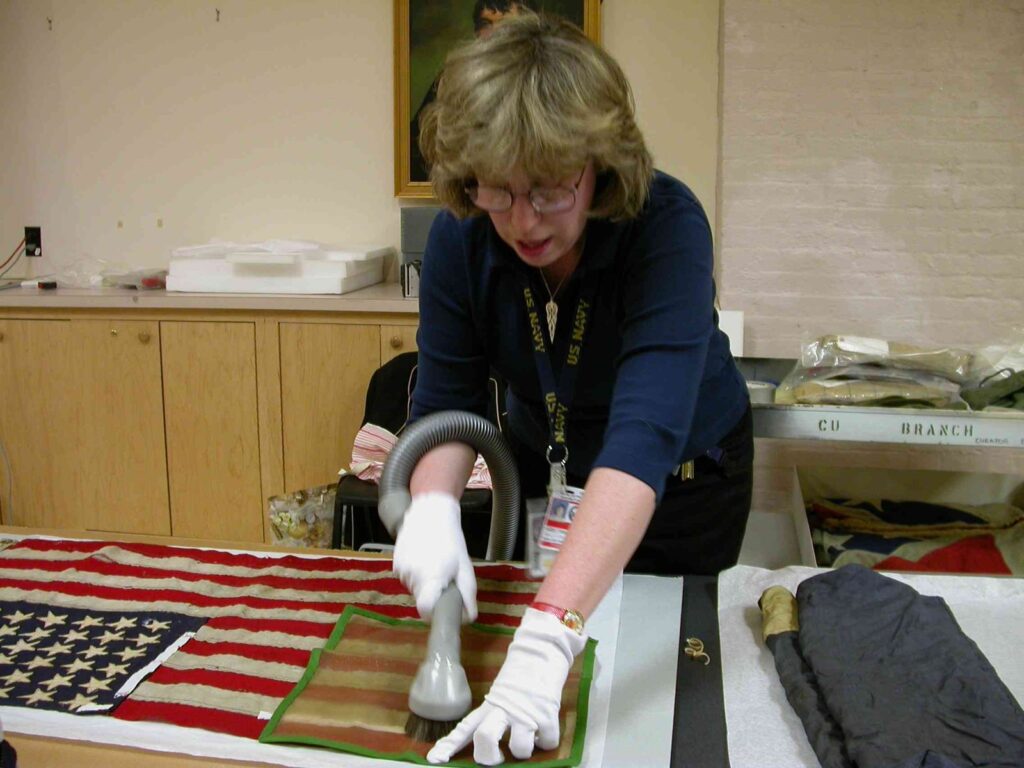
CCI Notes 13/16, the institute’s guide to mechanical surface cleaning, is the closest thing to a museum standard for dust. It prefers a HEPA vacuum with reduced suction. Upright machines and beater-bar power heads, the note says, “are never appropriate.”
The method is simple and slow:
- Lay the toy on a clean surface covered with acid-free tissue or prewashed cotton.
- Cover a section with nylon or polyethylene screening, 18 to 20 mesh, with its cut edges bound in cotton tape.
- Set the suction low enough that dirt lifts but the pile does not.
- Let the nozzle rest lightly on the screen and work with the direction of the pile.
- Move the screen across the whole surface, then turn the toy and repeat.
For three-dimensional objects, CCI suggests a soft natural-bristle brush that sweeps dust toward a nozzle covered with sheer fabric. That suits faces, ears, and paws, where a flat screen will not sit.
What the Smithsonian Measured
“Gently vacuumed” sounds precise, but the Smithsonian’s Museum Conservation Institute found nobody had defined it. Its tests showed that a screen cut air flow by 33 percent. Pressing an upholstery brush into the fabric, however, raised the air velocity on the textile by 578 percent.
The institute measured suction strength too. Pressing the brush down increased it tenfold, whatever the machine’s speed setting.
“The most important aspect of ‘gentle vacuuming’ is the hand of the person doing the cleaning.”
Museum Conservation Institute, Smithsonian Institution, “Gently Vacuumed: A term widely used, but rarely measured!”
CCI puts the same point as a rule: “suction removes the dirt, not pressure.” Keep the nozzle light, even with a screen in place.
Can You Wash a Vintage Stuffed Animal?
Usually not. CCI Notes 13/7 rules out washing for historic wool or silk, knits, stuffed quilts, and composite artifacts made of mixed materials. A jointed mohair bear stuffed with wood wool falls into several of those groups at once.
The physical reason is plain. “Textiles are weaker when wet,” the note says, and a wet object must dry fast. A packed body of wood wool or kapok holds water deep inside, far from any fan.
Color is the second risk. CCI’s colorfastness test, in Notes 13/14, uses blotting paper and purified water on a hidden spot, checked for up to 30 minutes. Yet the same note says wool should never be washed or tested at all, and it calls the test “not foolproof.”
The US National Archives gives a blunter rule for home collections. Its conservation chief advised readers to avoid cleaning items that have antique or monetary value, or that are in poor condition.
Sources differ on how far a collector should go. CCI describes surface cleaning that a careful owner can do, while the National Archives advises leaving valuable pieces alone. For a mohair or wood-wool bear, we follow the stricter line: dry surface cleaning only, and a conservator for stains.
Checking for Pests Before Storage
Insects do more damage to old plush than dust does. The National Archives lists what to look for: holes, staining, webbing, and dead insects. Damp conditions, it adds, draw both insects and mold.
Wool and mohair attract clothes moths in particular. We covered that risk in our guide to vintage stuffed sheep toys, so here we focus on the museum response.
The Freezer Protocol
CCI Notes 3/3 calls -20°C for one week “a practical recommended treatment.” Household deep freezers running at -20°C to -25°C can work, and the note says nothing is gained below -40°C.
The handling matters as much as the temperature:
- Seal the toy in a clear polyethylene bag before freezing, closed by heat sealing or polyester tape.
- Do not suck the air out, since a tight bag can crush fragile parts.
- Wrap water-sensitive pieces in tissue inside the bag.
- After treatment, leave the sealed bag at room temperature for a day so condensation forms on the plastic, not the toy.
CCI says textiles, fur, leather, and wood are not significantly threatened by cold. It warns that rubber and soft vinyl turn brittle, which matters for later plush with molded faces.
How to Store Stuffed Animals Long Term
Storage shapes a toy’s future more than cleaning does. The National Archives advises a cool, dry place and warns against hot attics and damp basements or garages. “Textiles last longest if they are stored in the dark,” it adds.
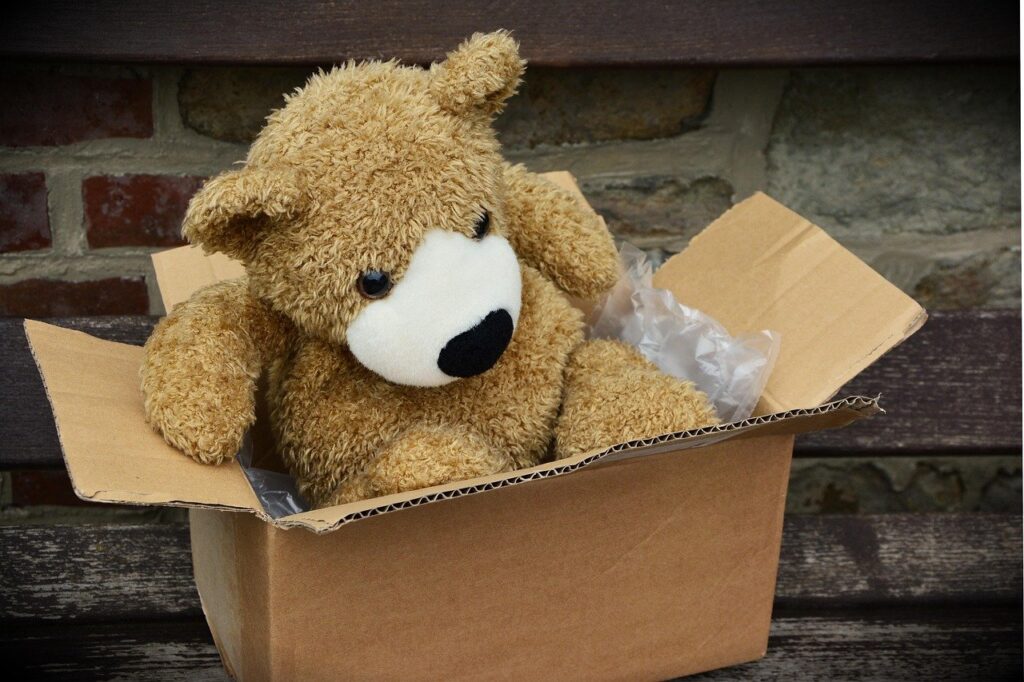
Winterthur Museum’s textile conservators store their own collection in archival boxes. For home collectors, they say polyethylene plastic bins are a cost-effective alternative, because that plastic is stable and gives off no harmful gases.
Line the box with undyed cotton, then pad the toy with unbuffered acid-free tissue. Sealed plastic is a tool for the freezer step, not a home for the toy. A bag that traps moisture creates the damp conditions the National Archives warns about.
What Not to Do
The guidance above boils down to six mistakes:
- Do not machine-wash or soak a toy with wood wool, kapok, or mohair.
- Do not use an upright vacuum, a beater bar, or full suction.
- Do not press the nozzle or brush into the pile.
- Do not put a toy away until it is completely dry, a rule CCI applies to every textile.
- Do not store plush in an attic, basement, garage, or sealed bag.
- Do not keep cleaning after a seam, eye, or patch of pile comes loose.
When to Call a Conservator
CCI is clear that stains bound with grease or oil need wet or dry cleaning by a professional textile conservator. The same applies to any toy with powdering fibers, mold, or loose parts. The American Institute for Conservation runs a public directory of conservators by specialty.
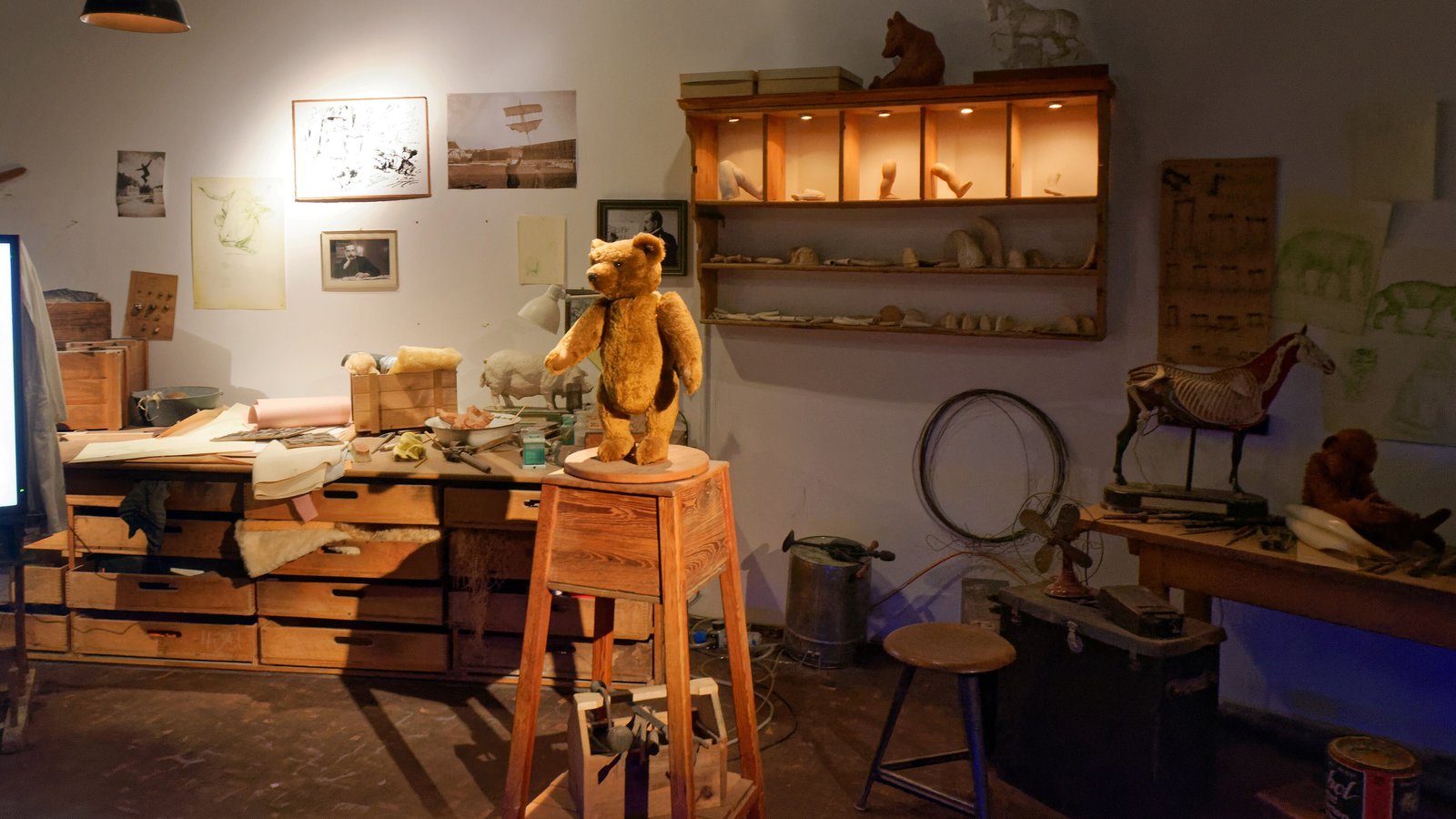
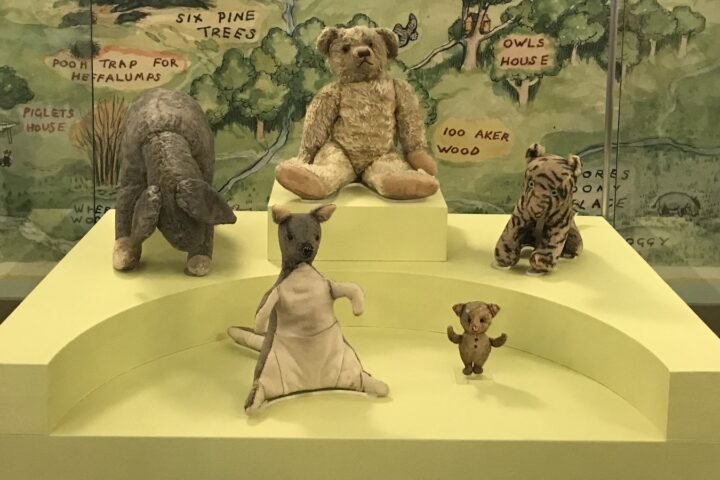
Our guide to teddy bear museums lists where to see well-kept early bears up close. Their display cases are a fair benchmark for your own shelf.
Sources
- Canadian Conservation Institute, “Mechanical Surface Cleaning of Textiles,” CCI Notes 13/16, canada.ca.
- Canadian Conservation Institute, “Washing Non-coloured Textiles,” CCI Notes 13/7, canada.ca.
- Canadian Conservation Institute, “Testing for Colourfastness,” CCI Notes 13/14, canada.ca.
- Canadian Conservation Institute, “Controlling Insect Pests with Low Temperature,” CCI Notes 3/3, canada.ca.
- Museum Conservation Institute, Smithsonian Institution, “Gently Vacuumed: A term widely used, but rarely measured!,” mci.si.edu.
- Mary Lynn Ritzenthaler, “Preserving Textiles,” Prologue, National Archives, Summer 2016, archives.gov.
- Amber Marcoon, “Caring for Your Collections: Textile Conservation Tips,” Winterthur Museum, April 1, 2025, winterthur.org.
- American Institute for Conservation, “Find a Professional,” culturalheritage.org.

Comments (0)