
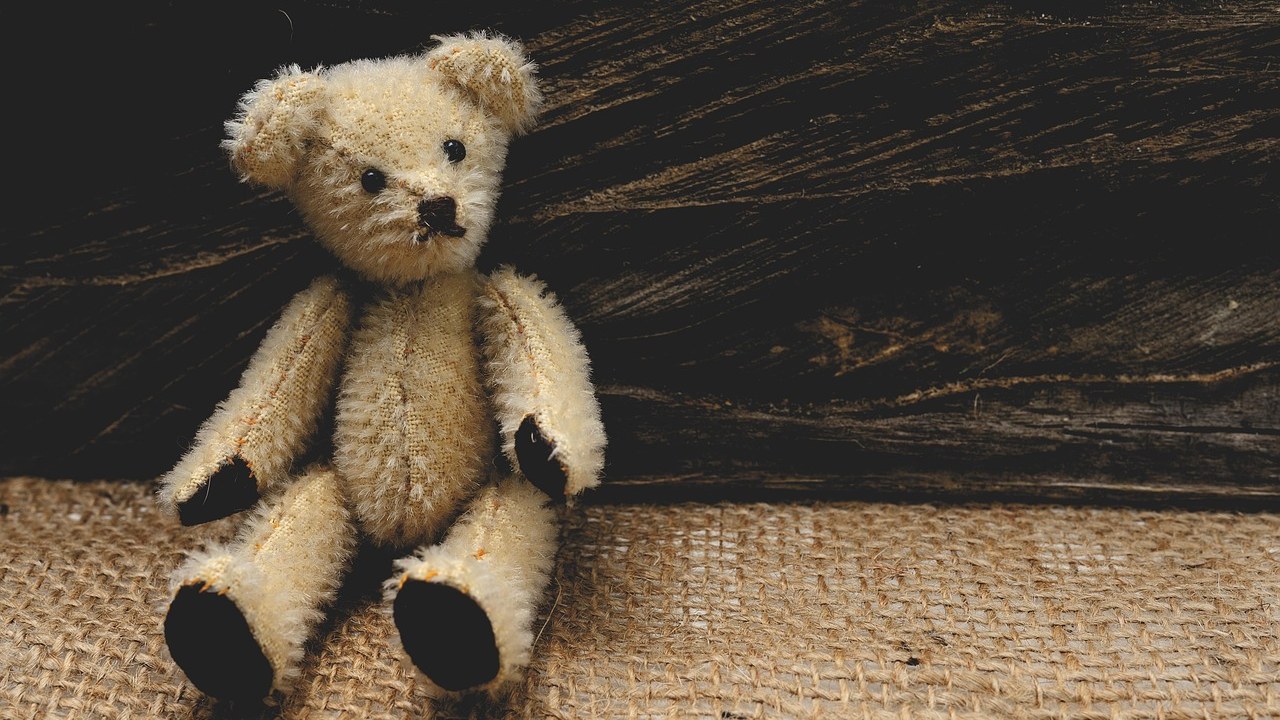
Teddy bear history begins with a hunt that went wrong for the president. In November 1902, Theodore Roosevelt refused to shoot a black bear tied to a tree in Mississippi.
Within a year, a newspaper cartoon of that moment had become a stuffed toy in a Brooklyn shop. A family workshop in Germany introduced its own jointed plush bear in the same stretch of time.
This guide follows the history of the teddy bear from that hunt to the first mass orders. It leans on records from the National Park Service, the Smithsonian, and Steiff’s company archive. Where they disagree on a date, we flag it, as our editorial guidelines require.
The 1902 Mississippi Hunt Behind the Teddy Bear Origin
A bear tied to a tree
Mississippi Governor Andrew H. Longino invited Roosevelt to hunt in the Delta that fall. The National Park Service dates the hunt near Onward to November 14, 1902. Unlike other hunters in the party, the president had not found a single bear.
The party’s guide was Holt Collier, described by the U.S. Fish and Wildlife Service as a famous African American bear hunter and outdoorsman. Collier tracked a 235-pound black bear to a watering hole. He stunned it with the stock of his rifle and tied it to a tree.
Then he sent for the president. Roosevelt’s companions urged him to shoot, and he refused to fire on a roped animal. That refusal reached the national papers within a day.
“I’ve hunted game all over America and I’m proud to be a hunter. But I couldn’t be proud of myself if I shot an old, tired, worn-out bear that was tied to a tree.”
Words attributed to Theodore Roosevelt, recorded as a rumor by the Smithsonian’s National Museum of American History
Treat that line with care. The museum itself labels it a rumor, so it belongs in the story as legend rather than as a verified quotation from the 1902 hunt.
From a newspaper headline to Berryman’s cartoon
The Washington Post reported the hunt on November 15, 1902. Its headline, preserved in the Smithsonian’s catalog record, read: “President Called After the Beast Had Been Lassoed, But He Refused to Make an Unsportsmanlike Shot.”
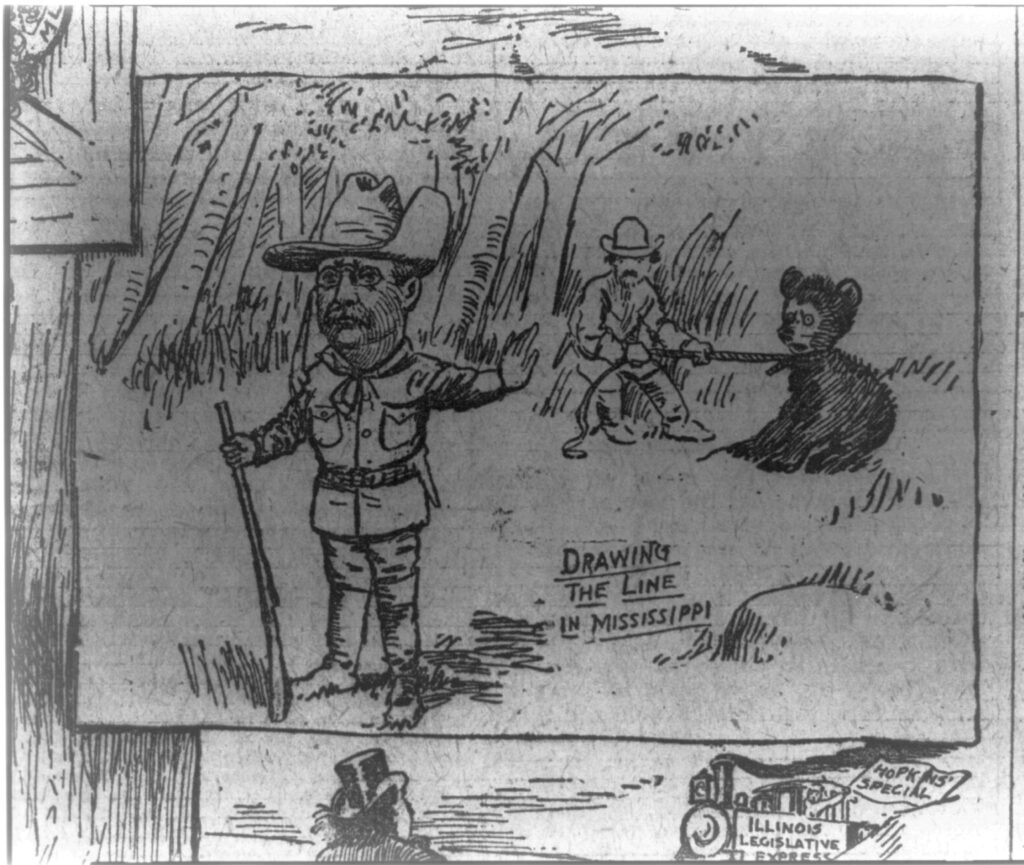
On November 16, the Post ran Clifford K. Berryman’s cartoon “Drawing the Line in Mississippi.” The Theodore Roosevelt Center at Dickinson State University lists the original in the Library of Congress Manuscript Division.
Berryman’s joke was political. The Smithsonian notes he used the refusal as a metaphor for a Mississippi boundary dispute Roosevelt faced at the time. The National Archives adds that Berryman turned the animal into a “cute, cuddly ‘teddy bear,'” which became a regular figure in his cartoons.
When Was the Teddy Bear Invented?
The teddy bear was invented in 1902 and 1903, twice, on two continents. In Brooklyn, Rose and Morris Michtom made a stuffed “Teddy’s Bear” after Berryman’s cartoon and founded the Ideal Toy Company in 1903. In Germany, Richard Steiff designed the jointed Bear 55 PB in 1902, and an American dealer ordered 3,000.
The two bears had different starting points. The Michtom bear came straight out of the Roosevelt news story. Steiff’s design came from a firm that had been sewing felt animals for two decades.
Rose and Morris Michtom in Brooklyn
The Michtoms ran a candy shop in Brooklyn, New York. The National Park Service credits Rose Michtom with sewing two stuffed bears to sell there after the couple saw Berryman’s cartoon.
Before making more, Morris wrote to Roosevelt for permission to use his name. According to the Smithsonian, their son Benjamin recalled that Roosevelt agreed but doubted the toy would amount to much. That doubt aged badly, because the Ideal Toy Company, founded in 1903, grew into a multimillion-dollar business.
Richard Steiff and the Bear 55 PB
Steiff was already an established toy maker. The company dates its founding to 1880, when Margarete Steiff sewed a small felt elephant meant as a pincushion. Her nephew Richard joined the firm in 1897.
Richard designed the Bear 55 PB in 1902, a plush bear with movable arms and legs. Steiff’s corporate timeline says it was shown at the Leipzig Toy Fair, where an American dealer ordered 3,000 of them.
Dates wobble here. Steiff’s own timeline files the bear and the Leipzig order under 1902, while many collector histories move the fair to the spring of 1903. The company also says the “Teddy” name only became attached to its bears in 1906.
Steiff’s trademark button in the ear dates from 1904, when Franz Steiff developed it. The first buttons carried an elephant before the company switched to “Steiff” lettering. That makes the button design a useful first clue when dating an early Steiff bear.
From Shop Window to Mass Production
The craze needed only a few years to take hold. Steiff’s records show how fast the teddy bear went from a trade-fair novelty to the core of the business:
- 3,000 bears ordered by one American dealer at Leipzig, per Steiff’s timeline.
- 973,999 teddy bears made by Steiff in 1907.
- 1.7 million toys of all kinds produced by Steiff that same year.
- 400 factory employees and 1,800 home workers on the company’s books in 1907.
Look at the 1907 numbers side by side. Five years after the first jointed prototype, bears made up more than half of everything Steiff produced, roughly 57 percent.
The backlash arrived on schedule. In 1908, according to the Smithsonian, a Michigan minister warned that replacing dolls with toy bears would destroy the maternal instincts of little girls. The sales figures suggest few parents listened.
An Original Ideal Bear at the Smithsonian
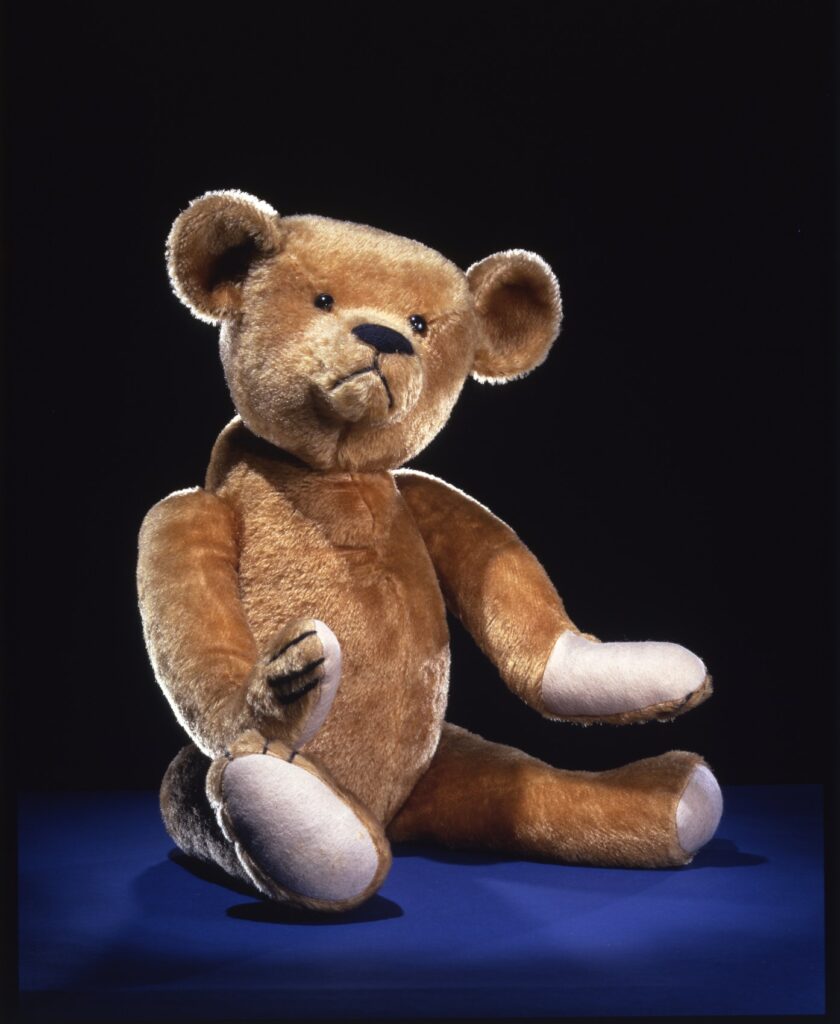
One of the earliest Michtom-era bears survives at the National Museum of American History in Washington, D.C. Its catalog record is short and specific, which makes it a useful reference point for collectors.
| Maker | Ideal Toy Company |
| Date | About 1903 |
| Size | 24 in (60.96 cm) |
| Credit | Mr. and Mrs. Kermit Roosevelt |
| Catalog no. | PL.252493.02 |
| Exhibition | American Presidency, National Museum of American History |
The bear’s route to the museum is the best part. In 1963, Benjamin Michtom, then Ideal’s president, wanted to mark the bear’s 60th birthday. He first offered an original bear to Alice Roosevelt Longworth, Theodore’s daughter, if she would pose with it.
“What does a 79-year-old doll want with a 60-year-old bear?”
Alice Roosevelt Longworth, as quoted in the Smithsonian’s catalog record
Michtom then turned to Kermit Roosevelt, a grandson of the president. Kermit’s children, Mark and Anne, posed with the bear and then hid it from their parents. They changed their minds, and the bear reached the Smithsonian in January 1964.
A Teddy Bear History Timeline, 1880 to 1964
The dates below come from the sources listed at the end of this article. Where a year is disputed between those sources, the entry says so instead of choosing one quietly.
- 1880 Margarete Steiff sews a felt elephant, the start of the Steiff company by its own account.
- 1897 Richard Steiff joins his aunt’s firm.
- 1902 November 14: Roosevelt refuses to shoot the tied bear near Onward, Mississippi.
- 1902 November 15 and 16: The Washington Post reports the hunt and runs Berryman’s cartoon.
- 1902 Steiff’s Bear 55 PB and the 3,000-bear Leipzig order, per Steiff; many collector histories say 1903.
- 1903 The Michtoms found the Ideal Toy Company.
- 1904 Franz Steiff introduces the button in the ear.
- 1906 The “Teddy” name attaches to Steiff’s bears, per the company.
- 1907 Steiff makes 973,999 teddy bears.
- 1908 A Michigan minister warns against bears replacing dolls.
- 1964 An original Ideal bear goes to the Smithsonian.
Where the Record Still Disagrees
Four details in the origin of the teddy bear shift depending on who tells it. None of them changes the outline of the story, but each one trips up confident retellings.
- The hunt date. The National Park Service gives November 14, 1902. Some retellings use November 15, which is the date of the Post’s report.
- The tree. The Fish and Wildlife Service says Collier tied the bear to a willow. The Park Service’s account says only “a nearby tree.”
- The newspaper. The Smithsonian’s record calls Berryman a Washington Star cartoonist. The National Archives explains that he moved to the Star in 1907, after the bear cartoon ran in the Post.
- The Leipzig year. Steiff files its first big bear order under 1902, while many collector histories say 1903.
For collectors, these gaps carry real weight. A seller who labels a bear “1902” with total confidence is claiming more than the archives can support. The useful question for any early bear is narrower: who made it, and what paper trail backs that up?
Sources
- National Park Service, Theodore Roosevelt Birthplace, “The Story of the Teddy Bear,” nps.gov.
- National Park Service, Theodore Roosevelt Inaugural Site, “Teddy Bear History,” nps.gov.
- U.S. Fish and Wildlife Service, Theodore Roosevelt National Wildlife Refuge, “About Us,” fws.gov.
- Smithsonian National Museum of American History, “Teddy Bear,” ca. 1903, PL.252493.02, si.edu.
- Theodore Roosevelt Center, Dickinson State University, “Drawing the line in Mississippi,” 1902, theodorerooseveltcenter.org.
- National Archives, “Clifford K. Berryman Biography,” archives.gov.
- Margarete Steiff GmbH, “From the past to the present,” corporate.steiff.com.
13 thoughts on “Teddy Bear History Began With a Shot Roosevelt Refused”